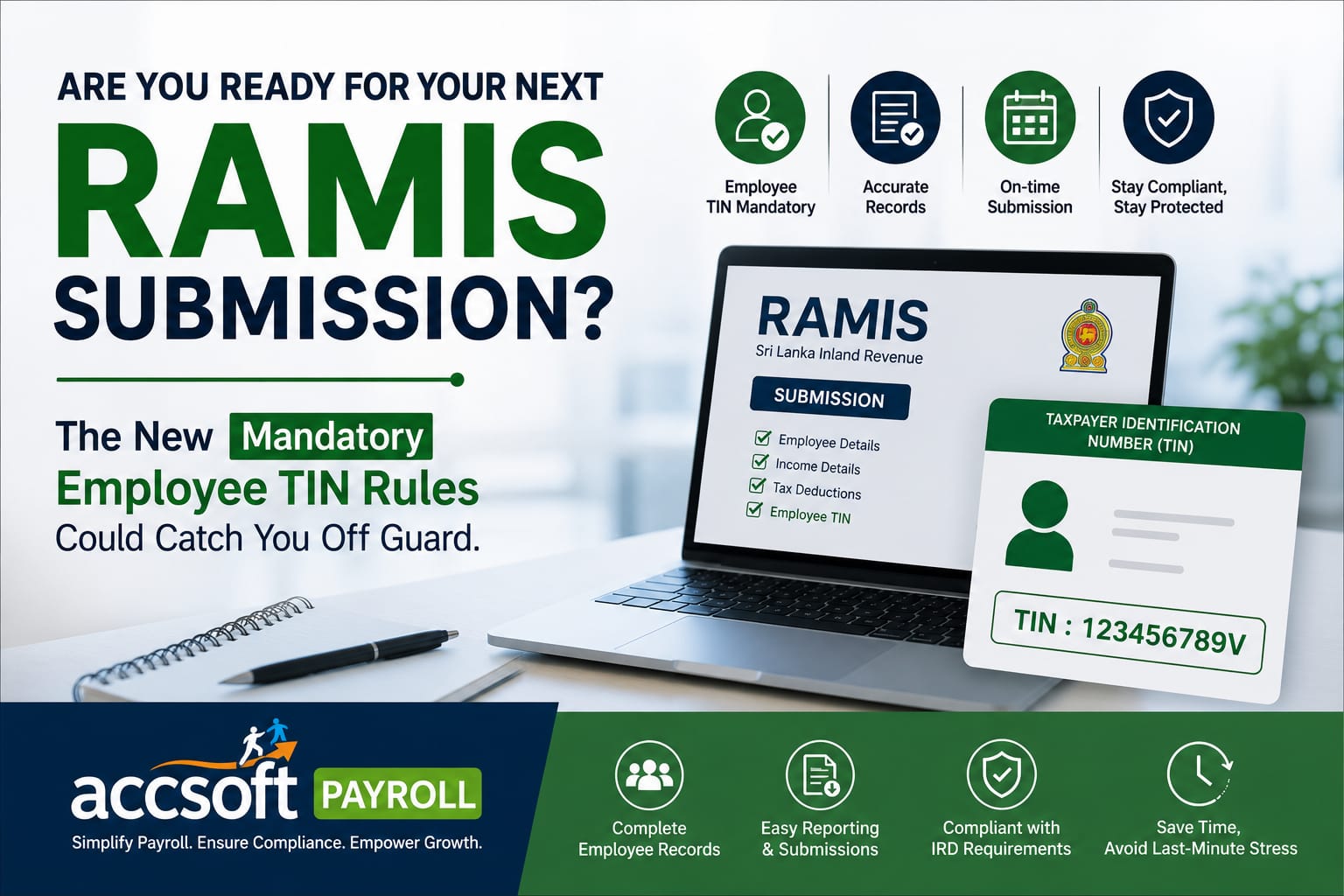
For many businesses, RAMIS submissions are something that gets attention only when the deadline is approaching.
A few days before the submission, the payroll team starts collecting information, checking employee records, reviewing salary details, and making sure everything is ready. Most of the time, it's a routine process.
This year, however, many employers are discovering a new challenge.
Employee Taxpayer Identification Numbers (TINs) are becoming increasingly important, and businesses that haven't maintained complete employee TIN records may find themselves spending valuable time gathering missing information at the last minute.
Why This Matters
In the past, many organizations focused mainly on employee names, NIC numbers, EPF numbers, and salary details.
Today, tax reporting requirements are becoming more detailed, and maintaining accurate employee TIN information is becoming an important part of payroll administration.
If employee records are incomplete, payroll teams may find themselves contacting staff individually, following up for missing details, and updating records just before a submission deadline.
For organizations with a handful of employees, this may be manageable.
For businesses with 50, 100, or even 500 employees, it can quickly become a time-consuming exercise.
The Last-Minute Rush Nobody Enjoys
Most payroll professionals have experienced it.
A deadline is approaching. Someone discovers that employee information is incomplete. Multiple emails are sent. Phone calls are made. Spreadsheets start circulating. The payroll team works late to get everything ready.
While the submission eventually gets completed, nobody enjoys the stress that comes with it.
The reality is that employee information should ideally be collected and maintained throughout the year rather than during the week of submission.
What Employers Should Be Doing Now
Rather than waiting until the next RAMIS submission date, businesses should start reviewing employee records today.
Some simple questions to ask include:
- Do we have TIN numbers for all employees?
- Are employee records complete and up to date?
- Can we easily identify missing information?
- Is our payroll system capable of maintaining these records properly?
- Are we prepared if additional reporting requirements are introduced in the future?
A little preparation today can save a lot of pressure later.
How Technology Can Help
Many payroll issues don't arise because of complicated regulations.
They arise because information is scattered across spreadsheets, emails, and paper files.
A proper payroll system helps organizations maintain employee information in one place, making reporting and compliance significantly easier.
How AccSoft Payroll Can Help
AccSoft Payroll has been developed specifically for Sri Lankan businesses and helps employers maintain complete employee records, including information required for statutory reporting. It also works closely with AccSoft HR so employee master data stays consistent across departments.
Instead of manually tracking employee information, businesses can maintain centralized records and generate payroll reports with greater confidence.
The goal isn't simply to process salaries.
It's to ensure that payroll information is accurate, organized, and available when needed.
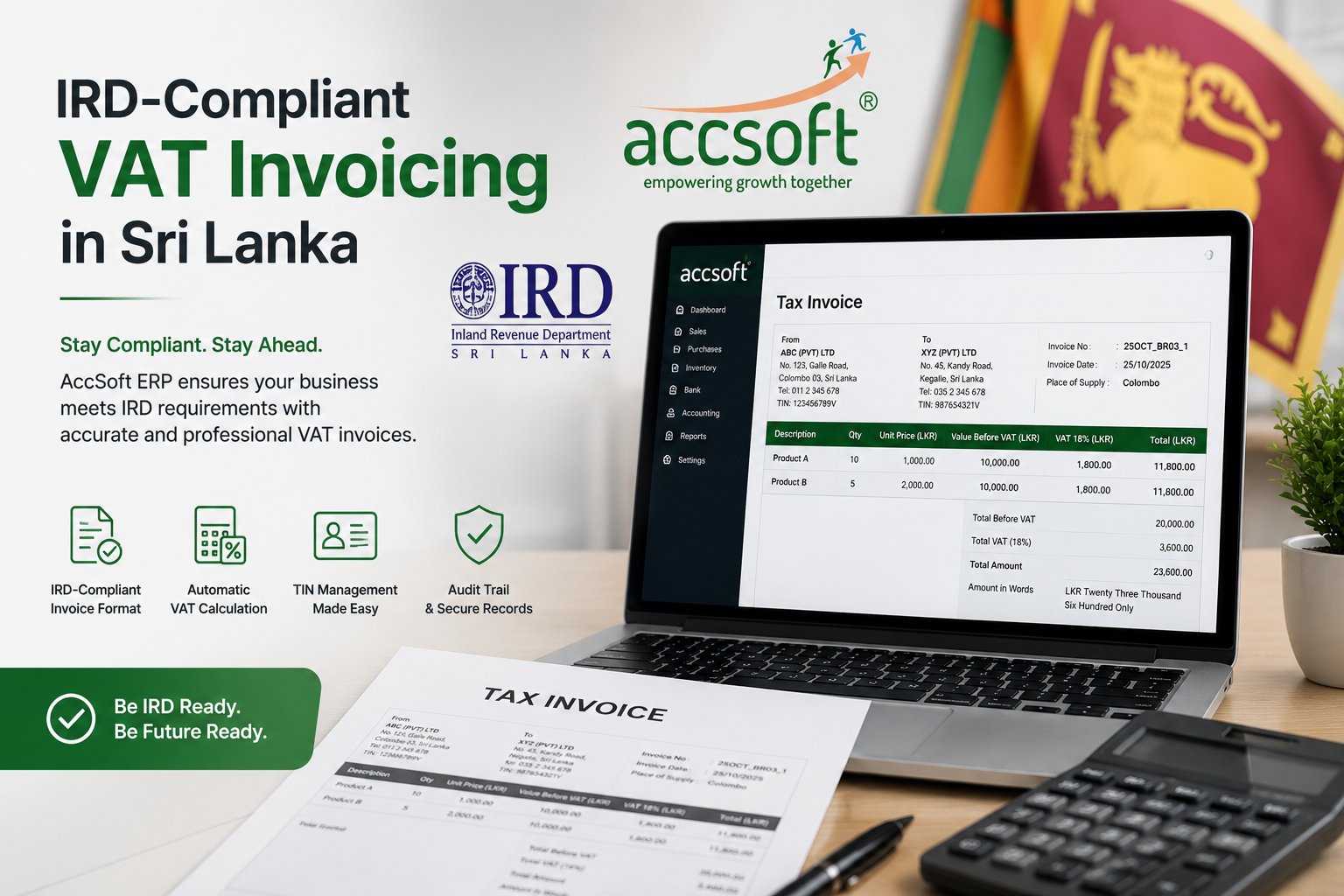
Because TIN is also central to VAT and tax invoicing, it's worth understanding the wider picture — see our guide to IRD-compliant invoicing in Sri Lanka.
Don't Wait Until the Deadline
Every year, many organizations discover missing information only when a reporting deadline is approaching.
The businesses that experience the least stress are usually the ones that prepare early.
If your next RAMIS submission is approaching, now may be a good time to review your employee records and ensure that TIN information is complete and up to date.
Frequently Asked Questions
What is a TIN?
TIN stands for Taxpayer Identification Number. It is a unique number issued by the Inland Revenue Department (IRD) to identify taxpayers.
Why is the employee TIN becoming important?
Recent reporting requirements have increased the importance of maintaining accurate employee tax information. Businesses should ensure employee records are complete and up to date to avoid difficulties during statutory submissions.
Do all employees need a TIN?
Businesses should follow the latest IRD guidelines and reporting requirements. If employee TIN information is required for statutory reporting, employers should collect and maintain these details as part of their employee records.
What happens if an employee does not provide a TIN?
Missing employee information can create delays and additional work when preparing payroll reports and statutory submissions. It is always better to collect the required information well before reporting deadlines.
How can employers collect employee TIN details?
Many companies request employees to provide their TIN during recruitment or update existing employee records through HR and payroll departments.
Can I maintain employee TIN information in Excel?
You can, but as the number of employees grows, spreadsheets become difficult to manage. Missing records, duplicate entries, and version control issues are common challenges.
How can payroll software help?
A payroll system helps maintain employee information in a centralized location, making it easier to retrieve records, prepare reports, and manage statutory submissions.
Can missing employee information delay a RAMIS submission?
In many cases, incomplete employee records create additional work for payroll teams and can delay the preparation of reports required for submission.
When is the best time to collect employee TIN details?
The best time is now. Waiting until a reporting deadline approaches usually results in unnecessary pressure on HR and payroll teams.
What is the biggest mistake businesses make before a RAMIS submission?
Leaving employee record updates until the last minute. Most payroll problems are easier to solve when information is collected and maintained throughout the year.
Be Ready for Your Next RAMIS Submission
AccSoft Payroll helps Sri Lankan businesses maintain complete employee records — including TIN details — and generate accurate statutory reports without the last-minute rush. Call 0777 554 225 or request a free demonstration today.